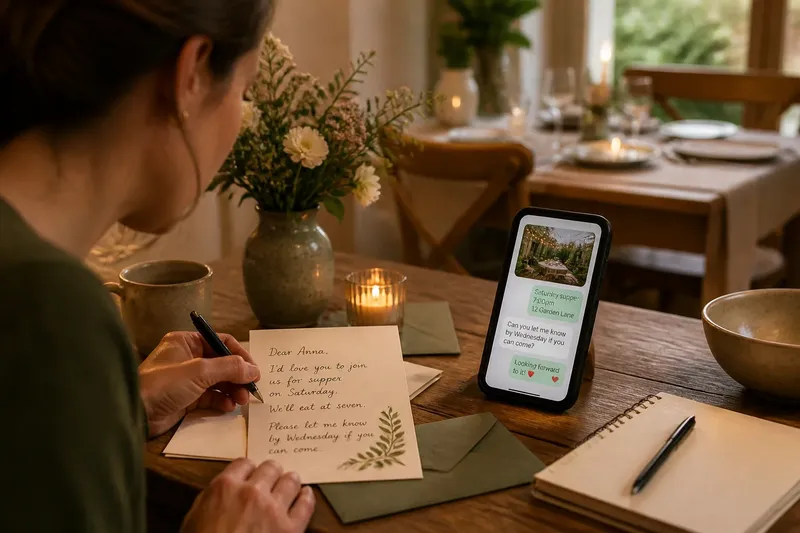
A Winter Supper Built Around the Table
A winter supper built around the table makes shared food and easy conversation the focus, using familiar dishes and things already at home.
The common mistake with a winter supper is treating it like a display: special crockery, an elaborate menu and a room arranged for photographs. That effort can crowd out the pleasure of sitting together. A winter supper built around the table works better when the food is familiar, serving is easy and the room invites people to linger.
What makes a winter supper feel seasonal without extra shopping?
Use the season as a cue for warmth and pace, not as a demand for particular ingredients or decorations. A pot of soup, a baked dish or a tray of roasted vegetables can anchor the meal; choose what suits your household and the people coming. Bread, a simple salad or a bowl of fruit can fill out the table without turning the evening into a cooking project.
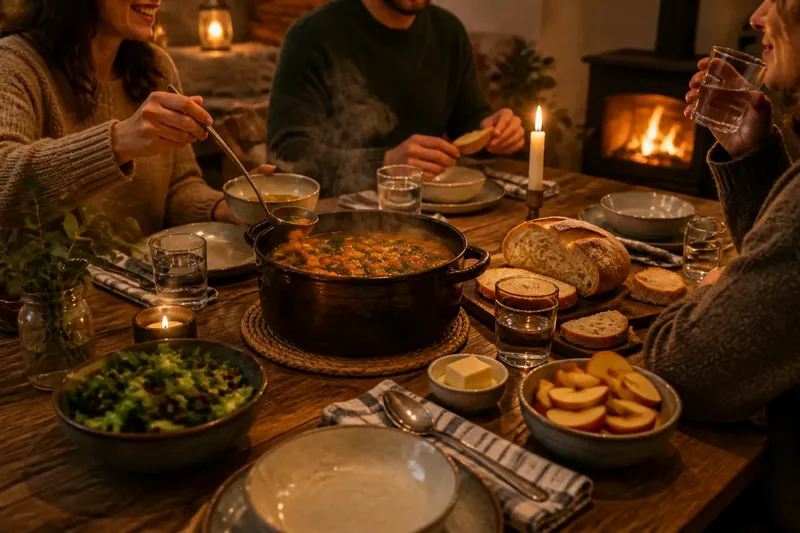
Look around before making a list. A checked cloth, plain tea towels, a candle in a sturdy holder, or a jug used for water may already give the table a settled feel. If you have no tablecloth, a clean surface is enough. Seasonal character can come from the food’s warmth, the light in the room and the unhurried way dishes are passed.
How should I choose dishes that can be shared?
Choose food that stays agreeable while people serve themselves and does not require everyone to eat at the same moment. A stew, lentil casserole, baked pasta or vegetable pie can be placed in the middle of the table or on a nearby surface. Add sides in bowls that are easy to pass, and provide serving spoons so guests do not have to improvise with their own cutlery.
Think about the meal’s shape before its complexity. One substantial dish, one fresh or crisp accompaniment and something simple to finish with is often plenty. Ask discreetly about dietary needs when inviting people, then choose a menu that can accommodate them without making a guest explain themselves at the table. Keep any special ingredients or dressings separate when that makes sharing easier.
Say you have invited a few neighbours after work and have a pot of vegetable soup, a loaf of bread and apples at home. You could warm the soup, put the bread on a board and set out butter and sliced apples for later; the expected result is a meal people can serve at their own pace, without a last-minute run for decorative extras.
How do I set a table when I do not have a matching set?
Set places with whatever clean plates, glasses and cutlery you have, then make the differences look intentional by keeping the arrangement simple. Plates need not match; repeating one element, such as the same napkins or a shared colour, can give the table a sense of order. A folded tea towel can stand in for a cloth napkin, and a jar can hold spoons or a small bunch of greenery.
Leave room for the food and for people to reach one another. Put hot dishes on heat-safe mats, keep candles away from sleeves and loose fabric, and place drinks where they are easy to refill. If the table is small, serve from a sideboard or kitchen counter rather than stacking every dish in the centre. Clear sightlines help conversation more than a crowded centrepiece does.
How can I make conversation feel easy?
Conversation is easier when the host is not continually leaving the room. Put water, napkins and serving utensils within reach, and choose a menu that allows you to sit down after serving. Let the meal begin without a formal speech; a brief welcome and an invitation to help themselves are enough to show people how the evening will work.
Give the table a gentle starting point without turning it into a game. You might mention a dish, ask what people have been cooking lately, or invite guests to share a small pleasure from the season. Then let the discussion find its own direction. If someone prefers to listen, do not press them to perform; comfortable pauses are part of a shared meal too.
Children and guests with different routines may need a little flexibility. Put a child-friendly serving within reach, allow people to eat at a comfortable pace, and avoid making a late dessert the condition for everyone staying seated. Hospitality here is less about a perfect sequence than about making participation straightforward.
What should I prepare before guests arrive?
Do the tasks that make the room usable, then stop before preparation becomes its own event. A short check can help:
- Clear enough table space for plates, glasses and serving dishes.
- Set out cutlery, napkins and water before the food is ready.
- Choose a place for coats and bags so chairs remain available.
- Make sure serving spoons and heat-safe mats are easy to find.
- Leave one clear surface for dishes that do not fit on the table.
- Decide which parts of the meal can be served without your help.
Use the list to spot friction, not to add decorative duties. If there is no room for a centrepiece, leave the table bare. If a dish needs constant attention, choose a simpler alternative or serve it before guests arrive. Where food labels or appliance instructions affect preparation, follow those instructions rather than guessing.
What if guests arrive at different times or bring something?
Make the meal forgiving. Choose a main dish that can wait safely according to its preparation needs, and have a small snack available for early arrivals. Tell guests where to put a contribution and whether it needs serving, reheating or refrigeration; that avoids a busy kitchen becoming a guessing game.
If arrivals are staggered, offer a drink and let conversation begin before everyone sits down. You can serve the main dish once the group is ready, or set out food in a way that lets later arrivals join without interrupting those already eating. Agreeing on that approach in your invitation can remove pressure without making the evening feel tightly scheduled.
Should I decorate the table for a winter supper?
Decorate only if it makes the table more welcoming or meaningful to you. A candle, a bowl of citrus or a few cut branches can be enough, while a table already full of food may need nothing more. Avoid arrangements that block faces, take up serving space or require attention while people are eating.
A winter supper built around the table can be modest and still feel considered: familiar food, a place for each person and enough room to pass the bread. The most useful finishing touch is often practical rather than ornamental—an extra chair, a jug of water or a clear path between the kitchen and the table.