Why a Welcome Changes at the Threshold
A thoughtful welcome at the threshold helps guests know where to pause, what to do with their things and how to join the room without awkwardness.
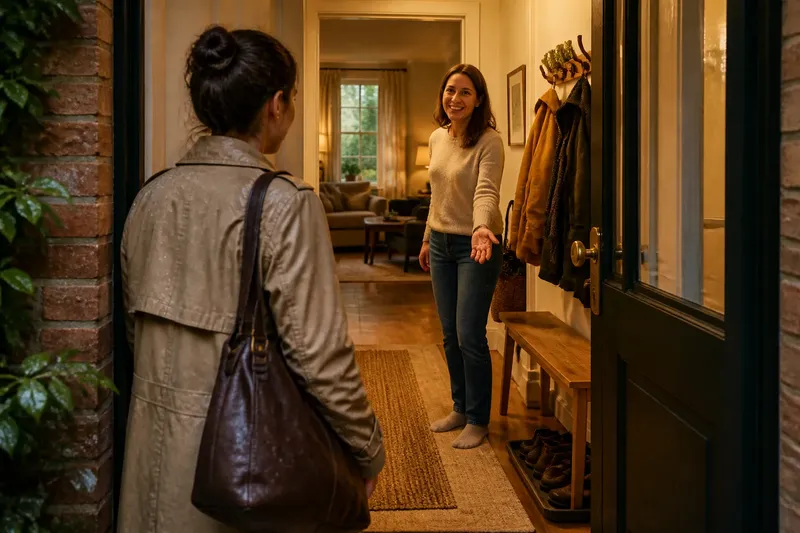
The common mistake at a front door is to keep talking while a guest is still working out where to stand, what to do with a coat and whether to come in. That small muddle can make an otherwise warm arrival feel like an interruption. A welcome at the threshold works best when the host gives one clear cue at a time, turning the doorway from a bottleneck into a gradual arrival.
In many Western homes, the entrance is a working space as well as a social one: shoes may be removed, coats hung up, or a door held open for someone behind. Customs differ between households, so a good host does not assume every visitor knows the local routine. The aim is not to stage a perfect greeting, but to make the next action easy to read.
Guests bunch up because the entrance has no clear pause
If people stop just inside the door, block the hall or hover on the step, the cause is often an unclear boundary between outside and inside. The guest may be waiting for permission to move, while the host expects them to follow. A narrow hall makes this hesitation more noticeable, but the problem can occur in a spacious entrance too.
Try greeting the visitor just beyond the doorway rather than calling from another room. Step aside to leave a route into the house, then point out where they can pause: “Come through and leave your bag by the bench.” A bench, a clear patch of wall or a mat can serve as a landing place without turning the entrance into a formal receiving area.
If the door opens directly into a busy room, avoid asking the guest to choose a path while people are moving around them. Give a short direction first, then make room for them to follow it. When several guests arrive together, welcome the person at the front and indicate the open space where the others can wait, rather than trying to greet everyone across a blocked doorway.
Coats and bags become awkward when storage is an unspoken rule
A visitor holding a coat through the first conversation may not be making a fashion choice; they may simply be unsure whether to take it off. The same applies to wet umbrellas, shopping bags and muddy boots. A host who expects guests to know the household’s habits can leave them caught between two competing manners: keeping their belongings close or putting them somewhere without asking.
Make the choice explicit and keep the invitation specific. “Would you like to hang your coat on the hooks?” is more useful than “Make yourself at home,” which may not tell a newcomer what is welcome. If there is a particular place for shoes, say so before the guest has walked further inside. A boot tray by the door signals the option, while a brief explanation makes the household custom clear.
Say you have invited a neighbour in from a rainy walk and there is no coat rack in the hall. You could point to a sturdy chair near the entrance and say, “You can put your coat there; I’ll take your umbrella.” The expected result is observable: the neighbour can free their hands and move further into the house without guessing where wet belongings belong.
A greeting feels rushed when the host tries to do everything at once
Opening the door while carrying a tray, calling instructions to someone in another room and asking a guest about their journey can make the welcome sound hurried, even when the host is pleased to see them. The trouble is not a lack of friendliness. It is that several demands arrive before the guest has settled.
Separate the greeting from the practical arrangements. First make eye contact, use the visitor’s name if you know it and offer a simple welcome. Then give one useful direction, such as where to put a bag or which room to enter. Save broader conversation for after the visitor has crossed the threshold and had a moment to take in the space.
When you cannot leave what you are carrying, say so plainly: “I’m glad you’re here; let me set this down, then I’ll show you where to put your things.” That sentence gives the guest a reason for the pause and a clear sense of what happens next. It is often kinder than continuing to speak while appearing distracted.
Guests hesitate when the next step is left for them to guess
After the coat is off, a visitor may still be unsure whether to remain in the hall, follow the host or go straight to a room where others have gathered. A doorway can feel like a test of familiarity: regular visitors know the routine, while a first-time guest has to infer it from glances and movement.
Signal the transition with both words and movement. “We’re all in the sitting room; come this way,” paired with walking at an unhurried pace, is clearer than turning your back and assuming the guest will follow. If the destination is not ready, offer a temporary place to wait and tell them what you are doing: “Please sit here for a moment while I let the others know you’ve arrived.”
Keep the route easy to follow. A door left open, a lighted hall and a clear path toward the room can help, but these cues work best alongside a spoken invitation. Do not rely on a guest to interpret a wave from across the house, especially if other people are talking or the layout is unfamiliar.
Household customs cause friction when they are treated as universal
Some homes expect shoes to come off; others do not. Some hosts greet visitors at the door, while others call them in from the kitchen. These are ordinary household differences, not measures of respect. Tension arises when a custom is enforced without explanation or when a host reads uncertainty as reluctance.
State the preference warmly and give a practical option. “We leave shoes by the mat; there are slippers here if you’d like them” tells a guest what to do without making their own habits seem wrong. If the visitor has a mobility need, a work uniform or footwear they cannot easily remove, make room for a different arrangement rather than turning the entrance into a negotiation.
Where a household’s practice depends on a particular item’s care instructions or local requirements, follow those rather than improvising. For everyday hosting, though, a brief explanation and a flexible alternative usually resolve the uncertainty before it grows.
What should a host say when a guest arrives early?
How can I welcome someone while I am still preparing?
Greet them at the door and explain the immediate situation in one sentence, such as, “I’m finishing in the kitchen; come in and sit by the window.” This tells them they are welcome while giving them a comfortable place to wait.
What if a guest does not want to remove their shoes?
Offer a choice without pressing for an explanation: they can keep their shoes on, use a clean covering if available or sit while they remove them. A considerate response matters more than insisting that every visitor follow the same routine.
How do I help a guest who does not know anyone else in the house?
Walk them to the group and introduce them by name, adding a simple point of connection if one comes naturally. Then stay with them briefly or indicate a seat, rather than leaving them at the edge of the room to work out how to join in.
What should I do if the doorway is too narrow for several arrivals?
Invite one person inside at a time and direct the others to a sheltered, comfortable place to wait. Keep the door clear and greet each person as they come through, so the queue does not become the whole welcome.
A useful welcome makes the first few choices obvious
Before visitors arrive, look at the entrance from the position of someone who has never been in your home. Can they tell where to pause, where a coat or bag might go and which way the gathering is? Clear away objects that narrow the route, leave a practical landing place and decide on a short phrase for the next step.
These small preparations are not about making a home look staged. They give the host fewer things to manage in the moment and let guests cross from arrival into company without guessing at every move. The welcome changes at the threshold when attention shifts from opening the door to making the next part of the visit feel possible.