Handwritten Invitation or Digital Message? Choosing the Right Tone for a Gathering
Handwritten invitation or digital message? Choose a format that suits the occasion and helps guests find the details, understand the tone and reply clearly.
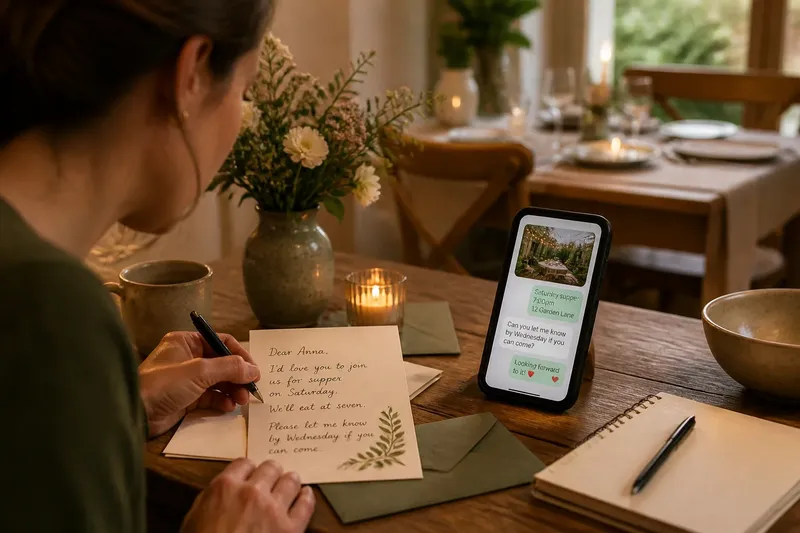
The most common invitation mistake is choosing a format before deciding what guests need to know. A handwritten invitation can feel overly formal for a casual gathering, while a brief digital message may leave a carefully planned occasion feeling vague. The right choice depends on the gathering’s tone, the details guests need to keep and how you want them to respond.
Let the occasion set the tone
A handwritten note gives an invitation a sense of individual attention. It can suit a small dinner, a milestone celebration or a gathering where the invitation itself should feel like part of the welcome. The paper, handwriting and envelope all contribute to that impression before the guest reads a word.
Digital messages tend to feel immediate and conversational. They work naturally for a last-minute drinks gathering, a relaxed garden lunch or a recurring neighbourhood supper, where guests are likely to reply in the same thread. Informal need not mean careless: a clear message with a warm opening can feel personal without becoming elaborate.
Think about the relationship as well as the event. A handwritten card may feel thoughtful for an older relative who values post, but awkward for a group that organises everything through a shared messaging app. A familiar channel often makes an invitation easier to notice and answer.
Give essential details a dependable home
Every invitation should make the practical arrangements easy to find: the date, start time, location, how to reply and any detail that could affect arrival or preparation. A note can make these details feel special, but guests may need to keep it somewhere safe or consult it later. Write legibly, and do not squeeze directions or important timing into decorative flourishes.
A digital message is easier to search, forward to a partner or update if plans change. A map pin can help with an unfamiliar venue, and a calendar invitation can put the date in view. These tools work best alongside a written address and any useful arrival instructions; a pin alone may not tell a guest which entrance to use.
For a gathering with several moving parts, pair formats rather than asking one to do everything. A handwritten card can carry the personal invitation, while a short digital follow-up supplies a map link or a later change. Connect the follow-up plainly to the original invitation so it does not look like a separate event.
Make the expected reply unmistakable
Guests should be able to tell whether you need a definite acceptance, a head count or simply want them to know they are welcome. A handwritten invitation can include a reply-by date and a phone number, but a guest may not know whether to call, text or send a card unless you say. Digital invitations make replying simple, though a reaction or brief message can be ambiguous if you need a firm answer.
State the requested response in ordinary language. “Please let me know by Friday if you can come” is clearer than “RSVP” on its own. If you need to know about dietary needs or whether a guest is bringing someone, ask directly and privately where appropriate; a public group thread may not feel comfortable for everyone.
Say you are hosting a small supper for neighbours and one guest has not used the group chat before. Send that guest a personal message with the date, address, start time and a request to reply directly by a chosen day. The expected result is clear: the guest can answer privately, and you can distinguish a firm reply from a simple acknowledgement.
Choose a format for the guests, not just the host
Accessibility and habit matter. Someone who finds small handwriting difficult may prefer a readable digital message; someone who rarely checks email may miss an invitation sent there. A printed card can be easy to display on a kitchen noticeboard, while a text may suit a guest who manages plans from a phone.
Consider whether the invitation needs to reach people individually or coordinate a group. A group message is efficient for a casual gathering, but it exposes replies to everyone and can invite side conversations. For a formal or sensitive occasion, individual messages or separate notes can offer more privacy and make the request feel considered.
Guests do not all need to receive the same format if their circumstances differ. Keep the wording and essential information consistent, then use the channel each person is most likely to see. If plans change, send the update through the channel used for the original invitation and make the change easy to spot.
Which invitation format fits common situations?
When does a handwritten invitation make sense?
Choose a handwritten invitation when its personal, keepsake quality suits the occasion and guests can comfortably receive and read post. It can be especially fitting for a small gathering where a carefully written message reinforces the care behind the invitation.
When is a digital invitation the clearer choice?
Use a digital message when timing is short, details may change or guests already coordinate through a particular app. Links, addresses and reminders are easy to share in one place.
Can a host use both formats?
Yes, if each has a clear purpose: use the note for the personal invitation and the digital message for a map, update or reply prompt. Avoid sending duplicate invitations that could make guests wonder whether they need to respond twice.
What if some guests do not use the same technology?
Contact them through a channel they regularly use, such as a phone call, printed note or text. Keep the details and reply request equivalent so nobody receives a less complete invitation because they prefer another medium.
Use wording that carries the same warmth in either format
Format sets an expectation, but wording does much of the work. Name the gathering plainly, make the invitation personal and say what guests should do next. “Come for supper on Saturday; we’ll eat at seven. Please tell me by Wednesday if you can make it” is warm and usable on a card or in a message.
For a more formal event, a restrained layout and complete names may help; for an informal get-together, a conversational opening can signal ease. Do not rely on decorative stationery, emojis or punctuation to convey meaning the words leave unclear. A guest should not have to infer whether children, partners or additional guests are included.
Before sending, read the invitation as if you were arranging your evening around it. Can you identify where to go, when to arrive and how to answer? If not, add the missing detail rather than relying on a second message to explain it.
For a handwritten invitation or digital message, choose the format that makes your welcome clear to the people receiving it. Let the occasion guide the tone, then use the clearest channel for the details and reply you need. A thoughtful invitation is defined less by paper or screen than by how easily a guest can understand the offer and respond.