The Heirloom Rule: Must an Old Object Stay as It Was?
The heirloom rule need not mean leaving an old object untouched. Learn how to honour its history while choosing a safe, meaningful role for it at home.
The most common mistake with the heirloom rule is treating “keep it safe” as “never use it”. That can protect an object from careless damage, but it can also leave a useful family possession untouched and its story unshared. Preserving an heirloom’s history and deciding what role it can have now are related choices, not the same one.
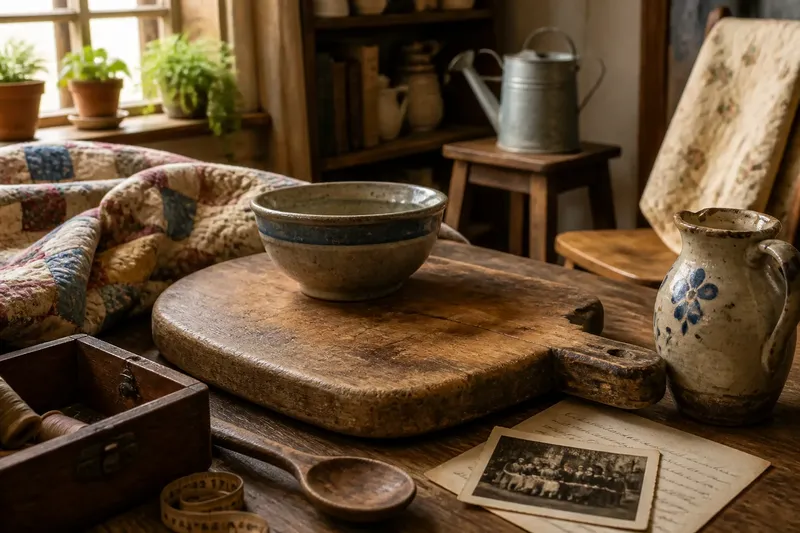
A wooden breadboard may carry knife marks from years of meals; a quilt may have warmed children who are now grandparents. Their wear can be part of what makes them meaningful. Yet a cracked handle, fragile stitching or fading inscription may call for a different kind of care. The question is which changes respect what the object has carried with it.
An heirloom holds more than its original purpose
An heirloom is an object passed on with some sense of personal or family significance. It need not be rare, valuable or formally handed down. A chipped jug beside the kitchen sink can mean more than a fine silver tray stored in a cupboard, because its importance comes from the people and routines attached to it.
That history may be physical: a repair, a name written underneath, or the worn patch where someone held a tool. It may also be remembered rather than visible, such as a bowl associated with Sunday lunch or a sewing tin that travelled between households. Before deciding how to handle an object, distinguish what you can observe from what you have been told about it.
Family memory can be incomplete. A story may explain why an object was kept without identifying when it was made, who made it, or whether a mark is original. If it has a maker’s label, a date or a distinctive material, record what you can see before making changes. A note in a paper folder can preserve context that photographs alone may not capture.
Preservation does not always mean leaving an object untouched
Preservation means taking reasonable care of an object’s condition and history. It does not automatically require freezing it in its present state. Dusting a sturdy stoneware bowl, storing a quilt away from damp, or keeping a loose button with a coat can help preserve an object while it remains part of household life.
Restoration is different: it aims to repair or return an object towards an earlier condition. It may be unsuitable if it would remove evidence of use, replace original material or change a detail that matters to the family. Even a tidy-looking repair can erase a clue about how an object was made or maintained.
There is also a middle ground: keep the original object but change its role. A delicate tablecloth might be folded over a chair rather than spread beneath dishes. A fragile carved wooden spoon could be displayed in the kitchen rather than used for stirring and washing. The object stays connected to daily life, though its work changes.
Begin with the object’s condition and the demands of use
Look closely before choosing a role. Notice cracks, loose joints, brittle fabric, rust, flaking paint, strong smells and repairs that seem to be holding a piece together. Then consider what the proposed use involves: water, heat, sunlight, food, handling, cleaning or the weight of other objects.
These details help distinguish signs of age from vulnerabilities that could worsen. A stable mark on a wooden board may tell a story without affecting its use. A split beside the handle may make lifting a full board unsafe. If the object has a maker’s label or care instructions, follow them; if its material or history is uncertain, ask a conservator before attempting a treatment that may be difficult to reverse.
Do not assume a familiar household remedy is gentle. Abrasive cleaners, adhesive tape, polish, detergent and direct sunlight can affect old finishes, fibres and paper. If you do not know what a surface is made from, keep handling and cleaning modest until you can identify it or ask someone with relevant conservation knowledge.
Match the heirloom’s role to what it can bear
Use is not a choice between daily service and permanent display. An object might have occasional or seasonal use, or a role that avoids its most vulnerable parts. Check the object and the demands of the task, then decide what follows from what you observe:
- Check whether joints, handles and surfaces are stable. If they are sound and the task is gentle, continue using the object as intended; if a joint is loose or a handle is cracked, stop that use and seek advice or choose a lighter role.
- Check whether the task involves water or repeated cleaning. If the material tolerates that care and no instructions warn against it, ordinary use may be suitable; if the finish or fibres are vulnerable, use the object less often or display it instead.
- Check whether heat or direct sunlight will reach it. If neither is part of the proposed setting, the role may be suitable; if either could affect the material, move it away or choose another place.
- Check whether the object’s weight is supported without strain. If it sits securely, keep it in that position; if it bends, sags or wobbles, remove the load and find a stable surface.
- Check whether a name, inscription or worn detail carries family meaning. If it remains visible and protected, retain the current arrangement; if it is obscured or at risk, reposition the object and record the detail before changing its use.
- Check whether a previous repair or treatment is uncertain. If its materials and condition are clear, follow known care instructions; if not, avoid cleaning or altering it and ask a qualified conservator for guidance.
Say you inherit a small wooden stool with a loose rung and a polished seat that a relative used while gardening. You record the family story, photograph the joinery and stop people sitting on it while you seek a furniture conservator’s advice. If the conservator confirms that the stool can safely support a light object without repair, you place a watering can on the floor beside it instead: the seat remains visible, and the stool is not asked to bear a person’s weight. If the joint needs attention first, you keep the stool out of use until that advice is followed. The decision depends on its condition, not a general rule that every heirloom must be used or stored.
Talk about changes before they surprise relatives
People can disagree about an heirloom because they are protecting different things. One person may care most about daily use; another may see the object as evidence of a particular relative or household. Naming that difference makes the discussion clearer than arguing over who is sentimental or practical.
Ask what each person wants to keep intact or visible. Is it the original finish, the signs of wear, the object’s familiar place, or the memory of how it was used? Relatives might agree that the object can move rooms while its inscription stays legible, or that it is used only on occasions when someone can take responsibility for its care.
When an heirloom belongs to several relatives, discuss significant changes before arranging repair, repainting, cutting or disposal. That matters especially when a change cannot easily be reversed. A brief written note of the shared decision, stored with a photograph and the object’s story, can guide future owners without suggesting that everyone feels exactly the same.
Keep a simple record with the object
A short record is useful whether the object is in regular use or tucked away. Note what the family knows, what remains uncertain, who passed it on and any care decisions already made. Avoid presenting recollection as established history when details are unknown: “Grandmother said it came from the old house” is more accurate than assigning a date or maker without evidence.
An archival-quality tag, paper folder or digital note can hold this information. Photograph details a future owner may otherwise miss, such as a mark on the underside, a repair, a maker’s stamp or the edge of a worn patch. Keep a copy somewhere another family member can access rather than relying on a single phone or account.
Records do not replace the object or make every alteration acceptable. Their value is more modest: they help future caretakers distinguish a deliberate choice from damage and preserve memories that may not be obvious from the object’s appearance.
What should you ask before changing an heirloom?
Does using an heirloom always cause harm?
No. Some objects are sturdy enough for continued use, while others are vulnerable to ordinary household conditions. Consider the object’s present condition and the demands of the task rather than assuming age alone makes use unsafe.
Should an old object be restored to look new?
Not necessarily. A repair that makes an object look tidy may remove an original finish or evidence of earlier use, so decide what matters before commissioning work. For fragile or unusual materials, ask a qualified conservator about options and likely effects.
How can relatives resolve a disagreement about an heirloom?
Ask each person what they want protected: the object’s condition, its old role, its visible wear or a family memory. Then consider a reversible arrangement, such as changing where it is kept or limiting its use, before choosing an alteration that cannot readily be undone.
Is storing an heirloom the same as preserving it?
Storage can reduce wear, but it still needs to suit the object. Damp cupboards, bright windows and crushing other belongings can cause trouble even when no one handles the item. Choose a clean, stable place and keep a note of where the object is stored.
Let care include a thoughtful role
The heirloom rule need not demand an untouched past. Instead, notice what an object has endured, what it can reasonably bear and which parts of its history deserve to remain legible. Sometimes that means continued use; sometimes it means a gentler role or careful storage.
When considering the heirloom rule, make the decision specific to the object rather than turning it into a family-wide command. Record its story, discuss changes with the people who share its meaning, and choose a role that does not ask it to carry more than it can. The heirloom rule works best when each choice leaves future caretakers clear about both the object’s condition and the reason for its place in the home.